
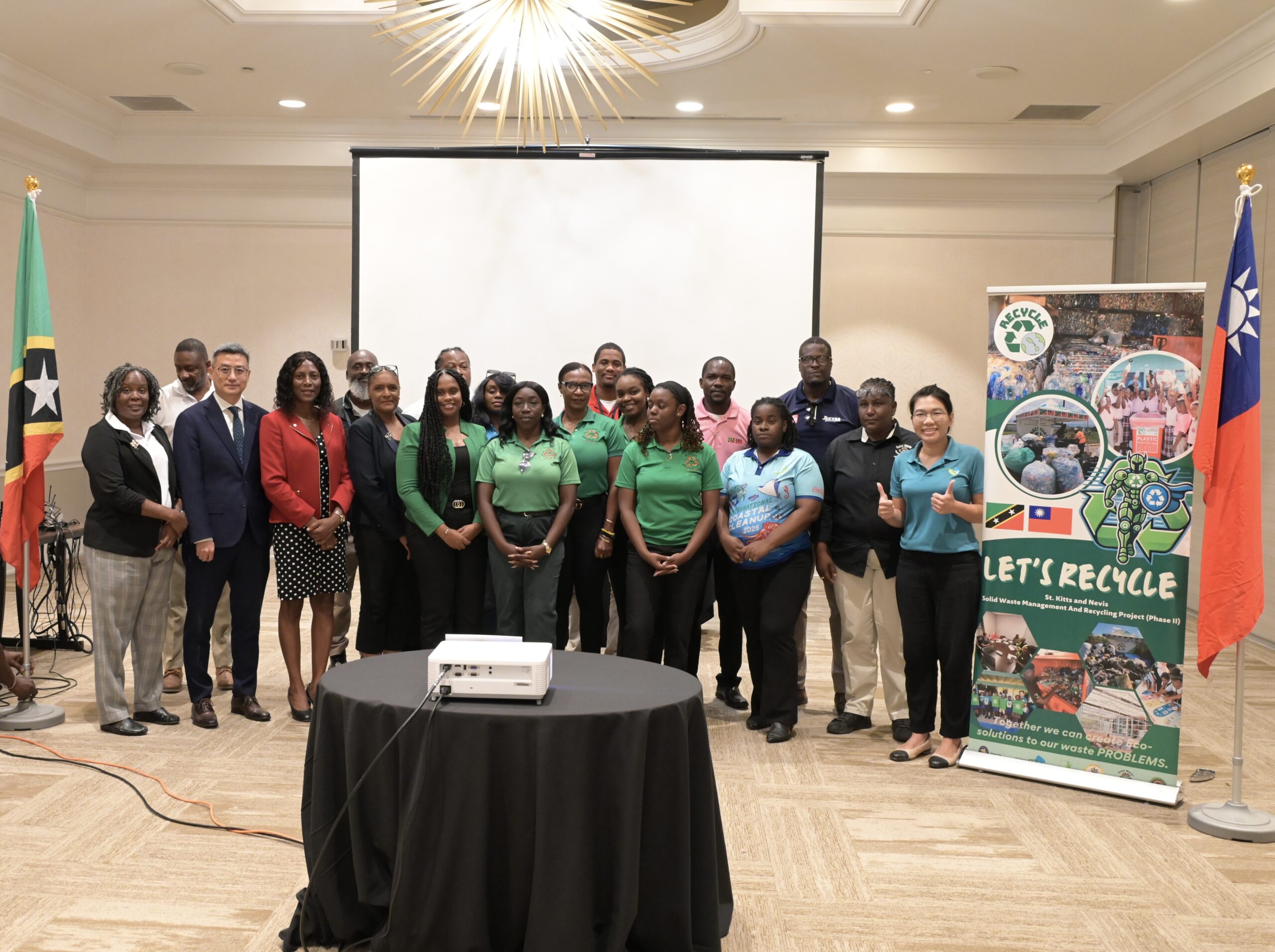
Basseterre, St. Kitts – August 31, 2026 – The push for a more sustainable future for St. Kitts and Nevis took a significant step forward last week. On Friday, August 29, key stakeholders gathered at the St. Kitts Marriott Resort for a high-level Consultation Workshop concerning the Solid Waste Management Assessment Outcome Report.
The session was hosted jointly by the International Cooperation and Development Fund (ICDF) Taiwan Technical Mission and the St. Kitts and Nevis Solid Waste Management Corporation (SWMC). The workshop aimed to bring together partners and experts to discuss challenges and strategies, share technical expertise, and coordinate efforts to improve and expand waste management systems on the island.
Our Federation has made significant strides in its capacity for reduction, recovery and resource circulation with the introduction of the recycling project and the Plastic Reduction Act 2025. However, according to Mr Jackie Wang, Consultant Manager, “accurate and evidence unique to the federation”, including landfill expansion constraints and seasonal increases in waste during the tourism season, are essential for reducing waste disposal, strengthening operational Management, and extending the landfills’ lifespan. These strategies aim to directly mitigate environmental risks and economic vulnerabilities caused by export disruptions and landfill limitations.
Discussions during the consultation focused on enhancing operational efficiency and policy reform, exploring innovative approaches to solid waste reduction and disposal as part of the bilateral cooperation between the Federation and Taiwan.
The findings presented exposed the need for a two-track method in which strategy is governed by operational evidence and translated into institutional gaps, policy design, and phased delivery. It was highlighted that, even though collection and export have begun and tools such as the Waste Reduction Act have advanced source control, this has also indicated the need to strengthen the quality, logistics, market, and implementation policies.
Additionally, it was revealed that waste legislation development and responsible agencies should be clear and become routine to foster a sense of responsibility and assurance in regulation, governance, and collection. The report indicated opportunities for improvement exposed by gaps in our current waste Management status, mainly: consistency in our quality standards for recyclable waste to increase market acceptance; vulnerability to export disruptions caused by low buyer numbers, which can disrupt shipping; and funding and data systems (data formats differ between the two islands).
By analysing our current situations, the federation can adopt a comprehensive strategic framework to guide our improvement efforts, inspiring collective commitment. Success depends on an integrated system that can reliably collect, process, ship, and trace materials. This includes identifying and strengthening the responsibilities of the institutions involved, improving and centralising data, and securing financing by building sustainable financing mechanisms within the existing legal framework.
The commitment shown in this consultation reflects a shared understanding: sustainability is not a destination but a continuous process of improvement and adaptation. With a unified strategic vision and the collective will to implement these findings, the Federation can ensure that its natural beauty and public health are protected for generations to come. The work continues, but the foundation laid here marks a definitive and promising step toward improved waste Management and a truly sustainable island state.