

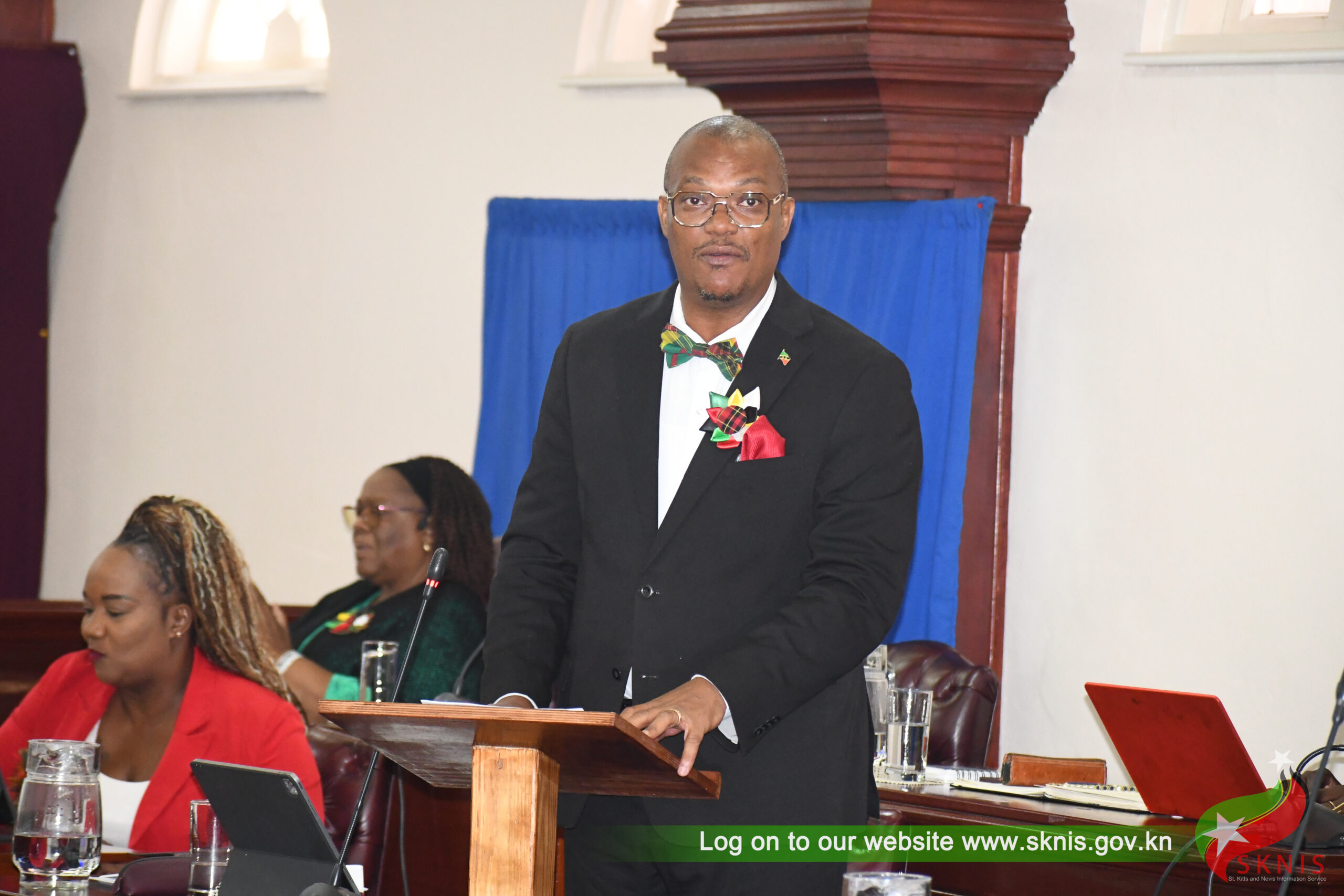
Basseterre, Saint Kitts, September 18, 2026 (SKNIS) – The National Assembly today, Friday, September 18, 2026, passed the Payment Systems and Services Bill, 2026, aimed at modernising the Federation’s legal and regulatory framework for payment systems and services.
Presenting the Bill, Acting Prime Minister, Honourable Dr. Geoffrey Hanley, said the legislation replaces the existing Payment System Act, Cap. 21.16, which predates mobile wallets, fintech platforms, electronic money and the digital payment services now widely used by consumers and businesses.
“Our people have moved on ahead of our law,” Dr. Hanley said, noting that the increased use of digital payments has expanded access to financial services while also creating risks related to fraud, cyber-attacks, settlement failures, money laundering and terrorist financing.
A key provision of the new legislation is the introduction of a licensing regime for non-bank entities providing payment and settlement services. The Bill establishes licence classes for electronic funds transfer and settlement, electronic money and payment system operators, with the Eastern Caribbean Central Bank (ECCB) serving as the licensing and supervisory authority.
The legislation also strengthens consumer protection. Electronic money issuers must maintain customer funds separately from operating funds, while consumers will benefit from requirements for advance notice of fees and changes to terms and conditions, as well as a seven-day timeframe for responses to complaints.
Dr. Hanley highlighted that the Bill has been developed by the ECCB in collaboration with ECCU Member Governments, creating a harmonised regional framework. The legislation also provides for regulatory cooperation and allows for the establishment of an Eastern Caribbean Payments Council.
The Bill introduces enhanced oversight of payment systems, including provisions addressing cyber and operational risks, liquidity, settlement and payment finality. It also provides legal certainty for netting and collateral arrangements in the event of insolvency.
Dr. Hanley described the legislation as a measure designed to build confidence in the Federation’s modern financial system.
“Confidence that the wallet on a citizen’s telephone is supervised. Confidence that a merchant who accepts a digital payment on Friday will be paid. Confidence that when a participant fails, the payments already made do not unravel. That confidence is the foundation of a modern economy, and it is the purpose of this Bill,” Dr. Hanley emphasised.
The passage of the Payment Systems and Services Bill, 2026, represents a significant step in strengthening the regulatory framework for digital payments while supporting financial inclusion, innovation, consumer protection and financial stability in Saint Kitts and Nevis.
-30-