

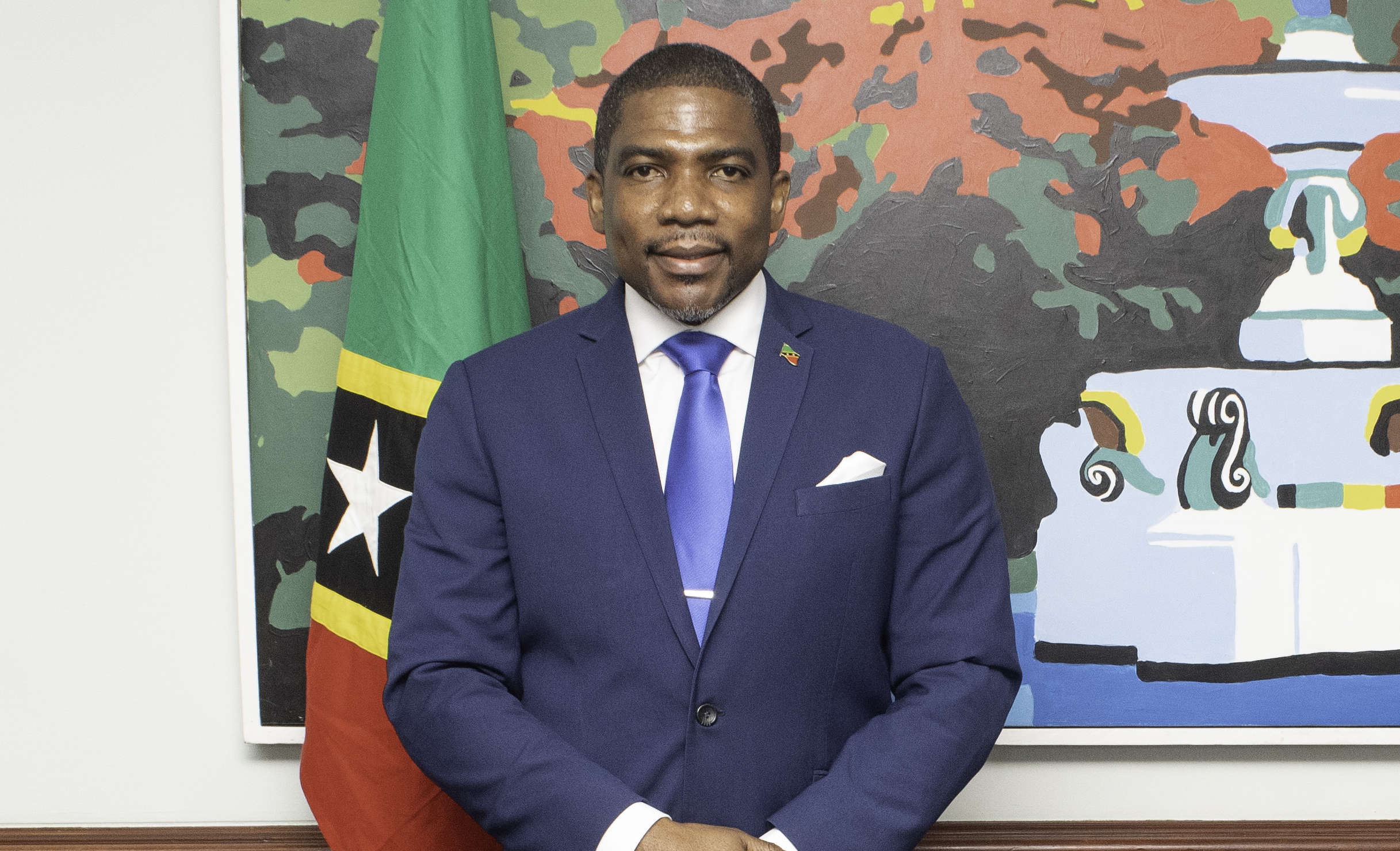
Basseterre, Saint Kitts, January 22, 2026 (PMO) — Prime Minister Hon. Dr. Terrance Drew has reaffirmed that recent decisions regarding third-country nationals, including the exclusion of Haiti from a specific resettlement framework, were necessary, carefully weighed, and taken in the best interest of national security and capacity management, while maintaining St. Kitts and Nevis’ strong humanitarian record.
Addressing the matter during his January 21 interview on Freedom FM’s Issues Programme, the Prime Minister emphasized that his foremost responsibility remains the protection of the people of St. Kitts and Nevis, even as the Government continues to demonstrate compassion toward vulnerable populations.
“The decisions that I’ve made are tough decisions,” Prime Minister Drew stated, “but they are decisions to protect Saint Kitts and Nevis while respecting and extending deep love for our brothers and sisters in Haiti.”
Prime Minister Drew explained that St. Kitts and Nevis has already accepted one of the highest numbers of Haitian nationals per capita within CARICOM, providing access to free education, healthcare, and social services, often at significant cost to a small state with limited resources.
He noted that capacity constraints, coupled with emerging national security concerns, necessitated firm action.
“We are kind and generous, but please do not try to take advantage of us,” the Prime Minister said, citing instances of human trafficking and exploitation linked to the migration crisis. “I have to protect the national security of Saint Kitts and Nevis.”
The Prime Minister made clear that the Government’s position does not reflect a withdrawal of solidarity with Haiti, but rather a recognition of practical limits and the need for regional and international solutions focused on stabilizing Haiti at its source.
“What we truly want is a stabilized Haiti,” he said, “so that the citizens of Haiti can flourish in their own country.”
Prime Minister Drew reaffirmed that St. Kitts and Nevis will continue to work through CARICOM, diplomatic channels, and humanitarian frameworks, balancing compassion with responsibility in a challenging global context.