

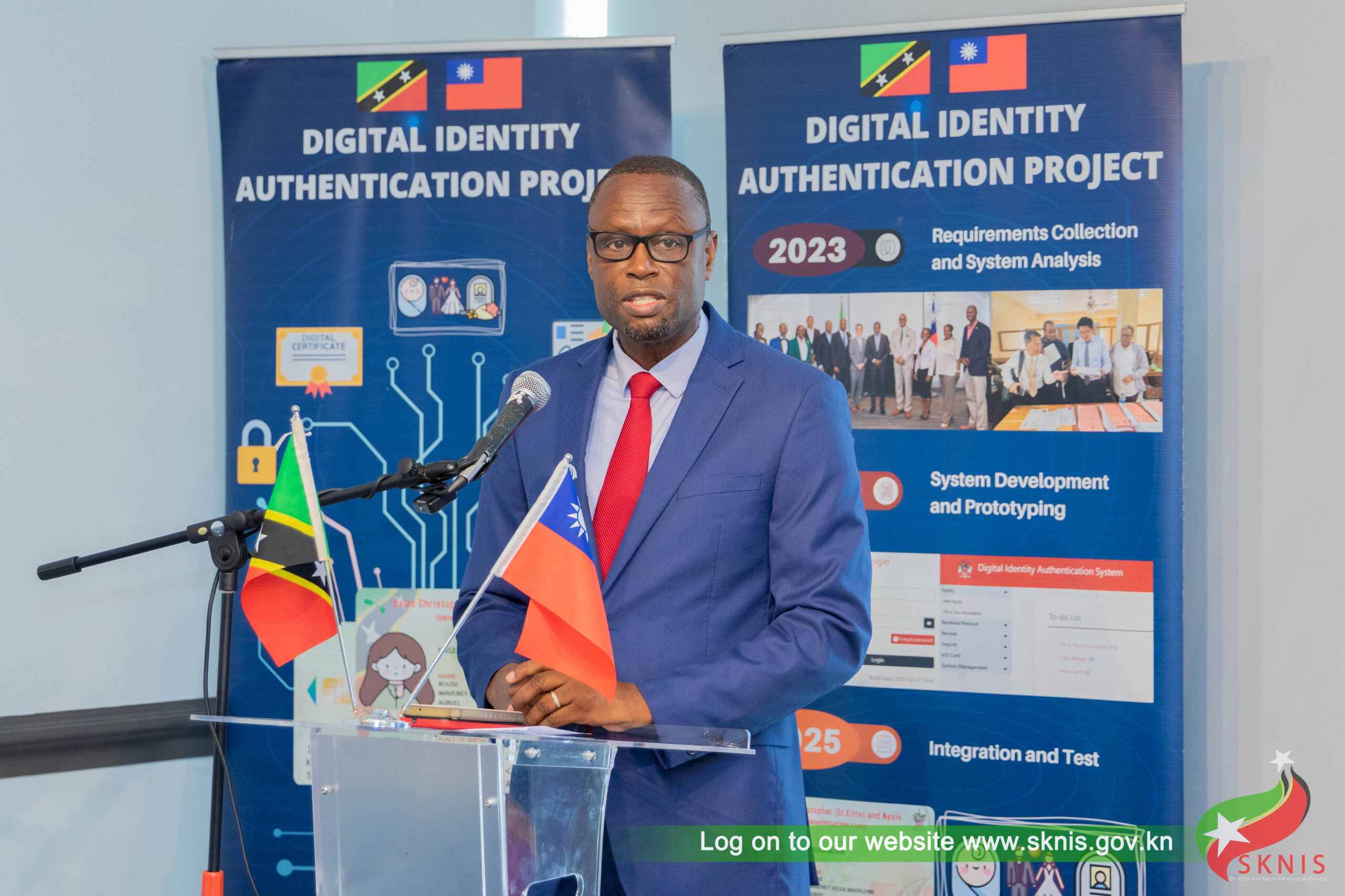
Basseterre, Saint Kitts, November 25, 2026 (SKNIS): Saint Kitts and Nevis has taken another significant step towards strengthening its digital infrastructure with the successful completion and formal handover of Phase One of the Digital Identity Authentication System (e-ID).
The Transfer Ceremony, held at the St. Kitts Marriott Resort on Wednesday, November 25, marked the completion of the system’s development and deployment phase following months of collaboration among technical teams, government stakeholders and international development partners.
Addressing the ceremony, Chief Digital Transformation Officer within the Digital Transformation Unit, Nigel Carty, described the handover as an important milestone in the Federation’s digital transformation journey, highlighting the growing need for secure and reliable methods of verifying individual identities in an increasingly digital world.

Using everyday banking transactions as an example, Mr. Carty explained that establishing and verifying one’s identity is fundamental to protecting individuals and institutions. However, traditional identification methods are becoming increasingly vulnerable to sophisticated identity fraud.
“The system of identifying and proving who people are is not as secure and as convenient as it needs to be, especially in an increasingly complex world,” Mr. Carty stated, emphasising the importance of the e-ID initiative in addressing these emerging challenges.
The system will feature an identification card equipped with a secure electronic chip, supported by a comprehensive digital infrastructure that includes secure data storage, specialised software and an interface connecting the system to official government records, including births, deaths and marriages.
With phase one completed, attention will now turn to phase two, which will involve establishing an e-ID card distribution office within the Ministry of National Security and commencing the distribution of cards to citizens.
The next phase will also see the integration of the system with essential government services, including passport and birth certificate applications, social services, and the payment of taxes and government fees. Integration with private-sector digital transactions is also anticipated.
Carty noted that the integration of the system with government and private-sector services will make processes “a lot more efficient” while improving convenience and accessibility for users.
-30-