

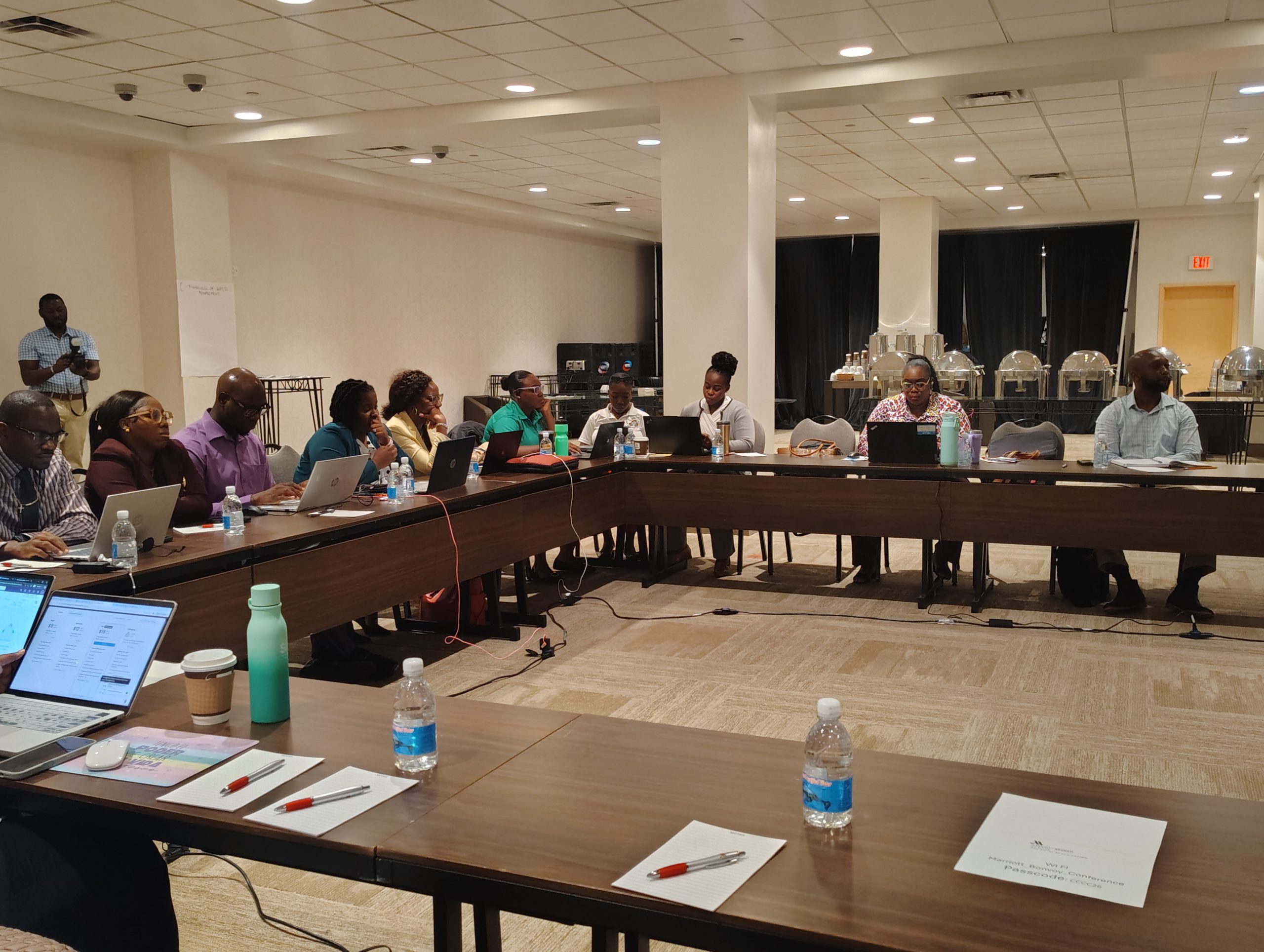
Basseterre, St. Kitts, 21 January 2026 – Government ministries, sector agencies, private-
sector stakeholders and technical partners met on Wednesday, January 21 at the Marriott
Resort (Saba Room) for a one-day workshop to strengthen the Federation’s Waste
Management Strategy and to develop a practical, prioritized Waste Management Action Plan.
Held from 8:30 AM to 3:30 PM, the workshop reviewed an initial draft strategy and produced
an implementable action plan focused on increasing resilience and sustainability in the waste
sector. The work will support updates to the Tourism Sector Strategy and the integration of
waste management measures across climate-sensitive economic sectors such as tourism and
agriculture.
Participants included representatives of the Department of Environment, the Solid Waste
Management Corporation, tourism and agricultural stakeholders, other public and private
partners, and technical facilitators from the Unite Caribbean and Leve Global Consortium.
The meeting addressed the specific challenges climate change poses to small island
developing states that depend heavily on tourism and agriculture and explored both
adaptation and mitigation approaches to strengthen sectoral resilience.
Workshop participants validated eight (8) foundational principles for the strategy including
the waste hierarchy, circular economy, polluter-pays principle, integrated waste management
and climate protection and identified core priorities: waste reduction, recycling and organic-
waste diversion; resilient waste infrastructure including landfill leachate and gas
management; public awareness and education; policy reform (such as Extended Producer
Responsibility) and controls on single-use plastics; and sustainable financing mechanisms.
Immediate, practical actions for follow-up were agreed including pilot programs for organic
waste separation in hotels and tourism facilities; reuse and deposit schemes; improved landfill
leachate and gas management; strengthened enforcement; a unified public communications
campaign; and mixed financing options comprising user fees, environmental levies and
Extended Producer Responsibility schemes.
All actions were aligned with adaptation and
mitigation objectives to protect coastal and marine environments, reduce greenhouse gas
emissions and improve the resilience of waste services during extreme weather events.
Consultants and government leads will consolidate all inputs from the Workshop into a draft
Waste Management Action Plan for stakeholder review and validation. Finalization of the
strategy will be supported by targeted capacity building and the development of bankable
project concepts to mobilize financing for implementation.
This engagement represents a pivotal step toward a coordinated, climate-smart waste
management approach that protects public health, safeguards the environment and supports
sustainable economic development across the Federation.